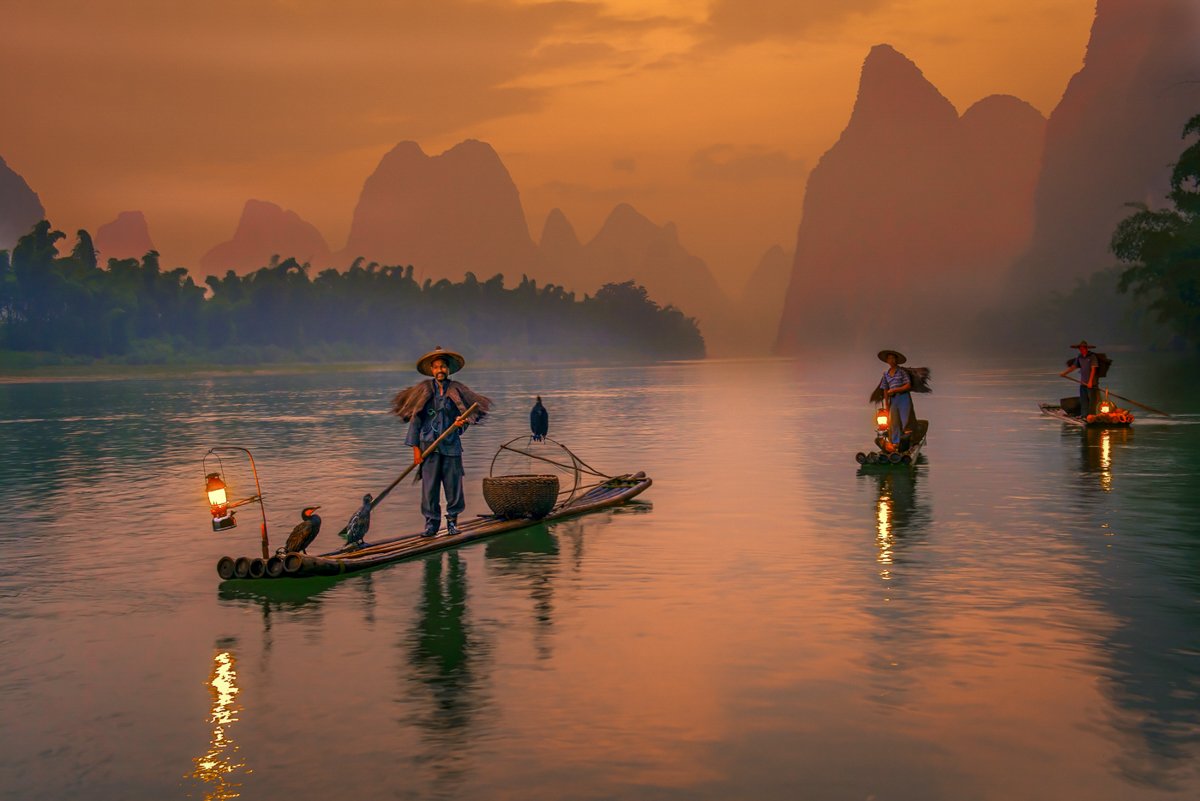
I was recently invited to give a presentation about my travels in China to the Cape Cod Art Center Camera Club. I decided to combine photographs from my 2025 trip to Xinjiang with images from earlier trips.
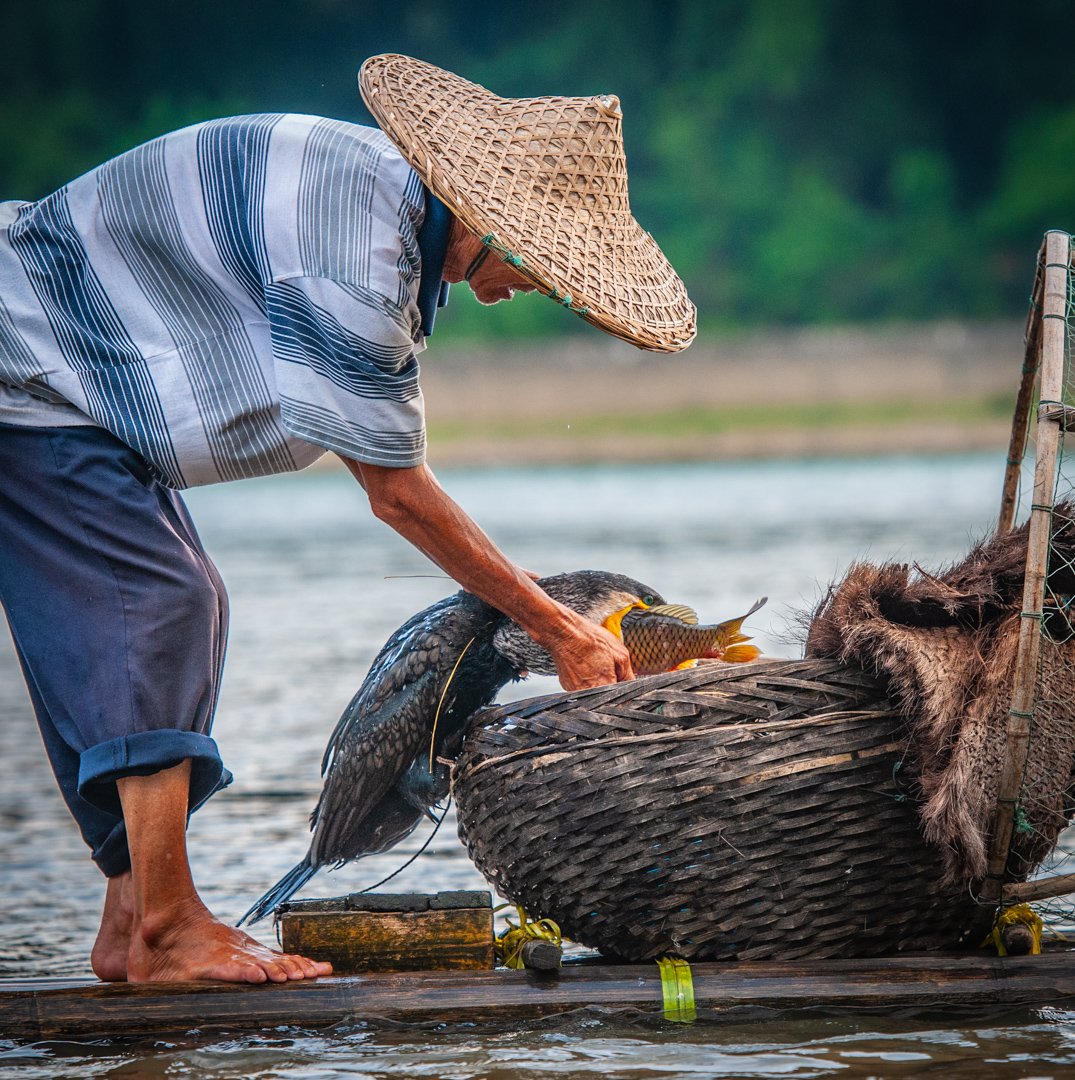
While reviewing my old images from Guilin, I encountered a small mystery. There were frames of cormorants wrestling remarkably large fish from the water, fishermen reaching down to retrieve the catch, birds flapping and splashing beside bamboo rafts. These were among the most active photographs I had made that morning. Yet I could barely remember photographing them.
What I did remember clearly were the photographs I had intended to make.
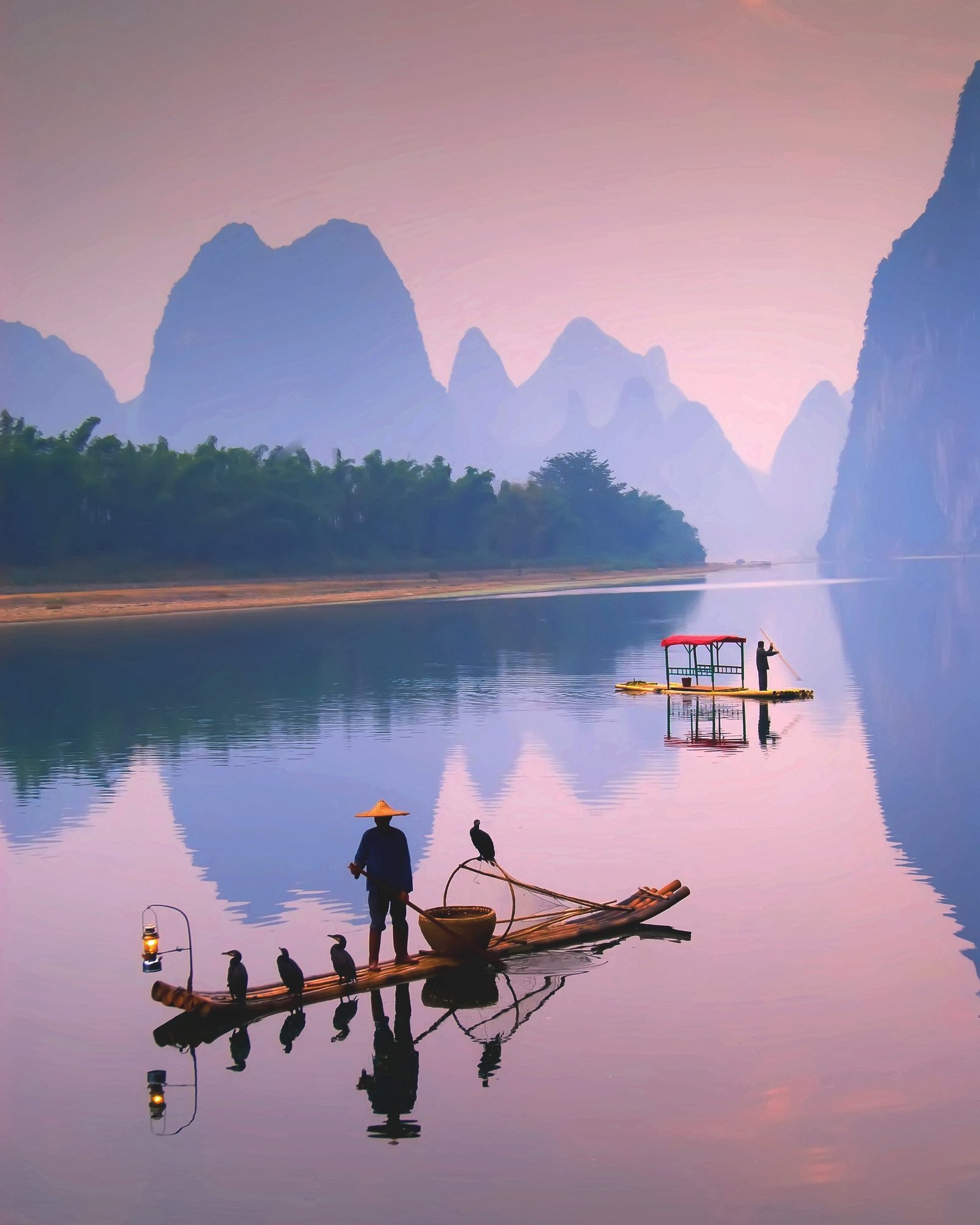
Like many photographers before me, I went to Guilin with particular images in mind: fishermen standing on bamboo rafts at dawn, cormorants nicely perched beside them, perhaps glowing lanterns reflected in the water, all surrounded by those ethereal limestone karst mountains for which the Li River is famous. You have probably seen variations of these classic Guilin images in magazines, travel books and, especially, photography competitions. And I did get them.
Perhaps that was “end of story” for me. I don’t know. Because what I had almost forgotten was much of everything that happened in between.
Seeing What We Expect to See
Was this a photographer’s version of inattentional blindness? When we arrive somewhere with a preconceived photograph in mind, our attention can become remarkably selective. I woke up before dawn, arrived in that beautiful early light and waited excitedly for the fishermen to appear against the misty karst mountains. I knew what I hoped to photograph.
When we concentrate intensely on what we expect to see, other things can pass through our field of vision without becoming firmly lodged in memory. Apparently, that may have happened to me.
My camera certainly recorded the cormorants catching fish. I followed the action, focused, composed and pressed the shutter. Clearly, I was paying enough attention to photograph it. But mentally, I was still focused on “the picture” – the fishermen on their bamboo rafts, the lanterns, the exquisite dawn light and the misty karst mountains.
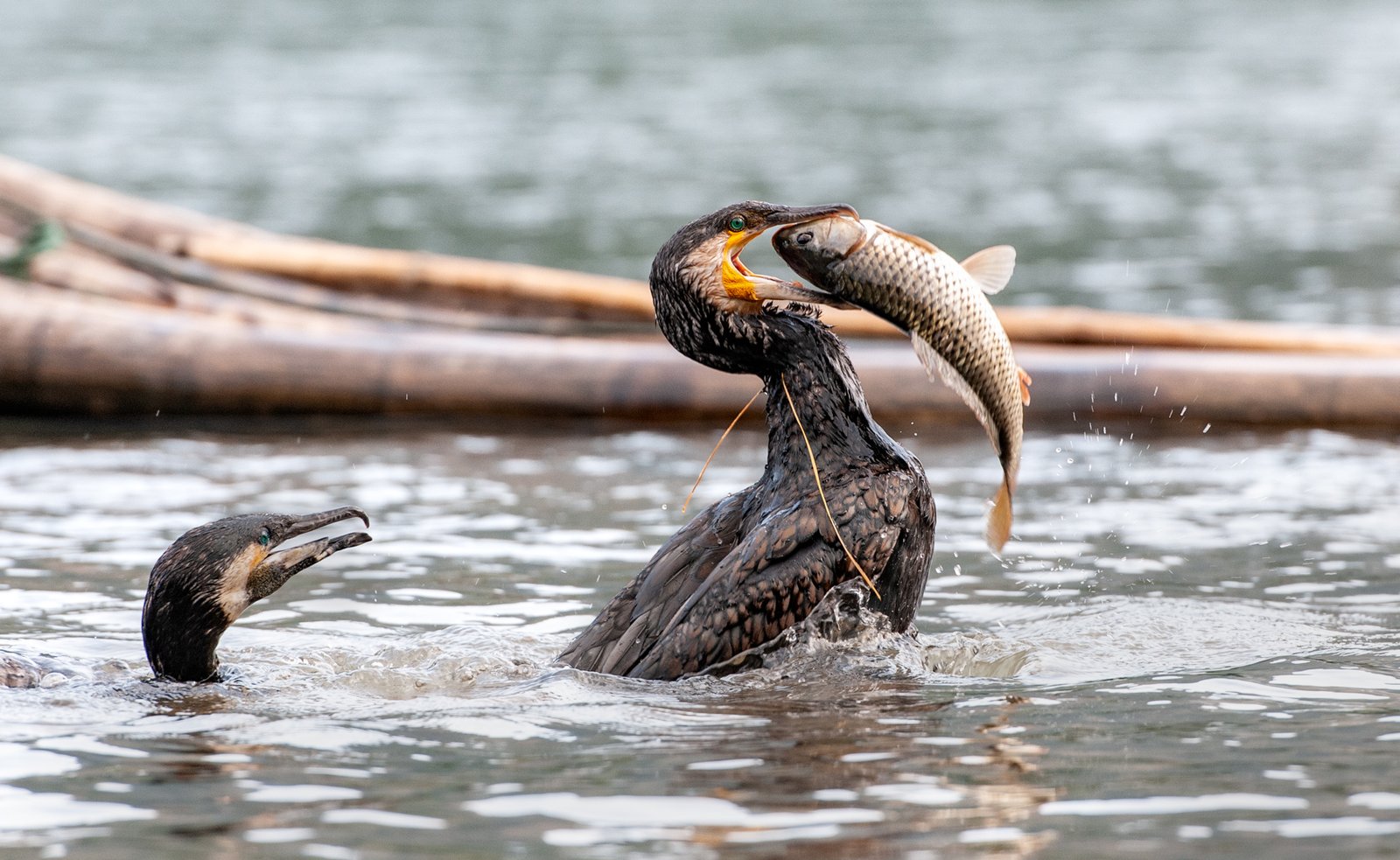
Looking at the files now, I find the irony amusing. The photographs that interest me most today are not necessarily the ones I had traveled there intending to make. They are the ones I almost overlooked.
And they made me curious about what I had actually witnessed.
A Thousand-Year Practice
Cormorant fishing has been practiced in China for more than a thousand years. Instead of relying on nets or fishing lines, fishermen trained cormorants to do something the birds already do well: dive and catch fish.
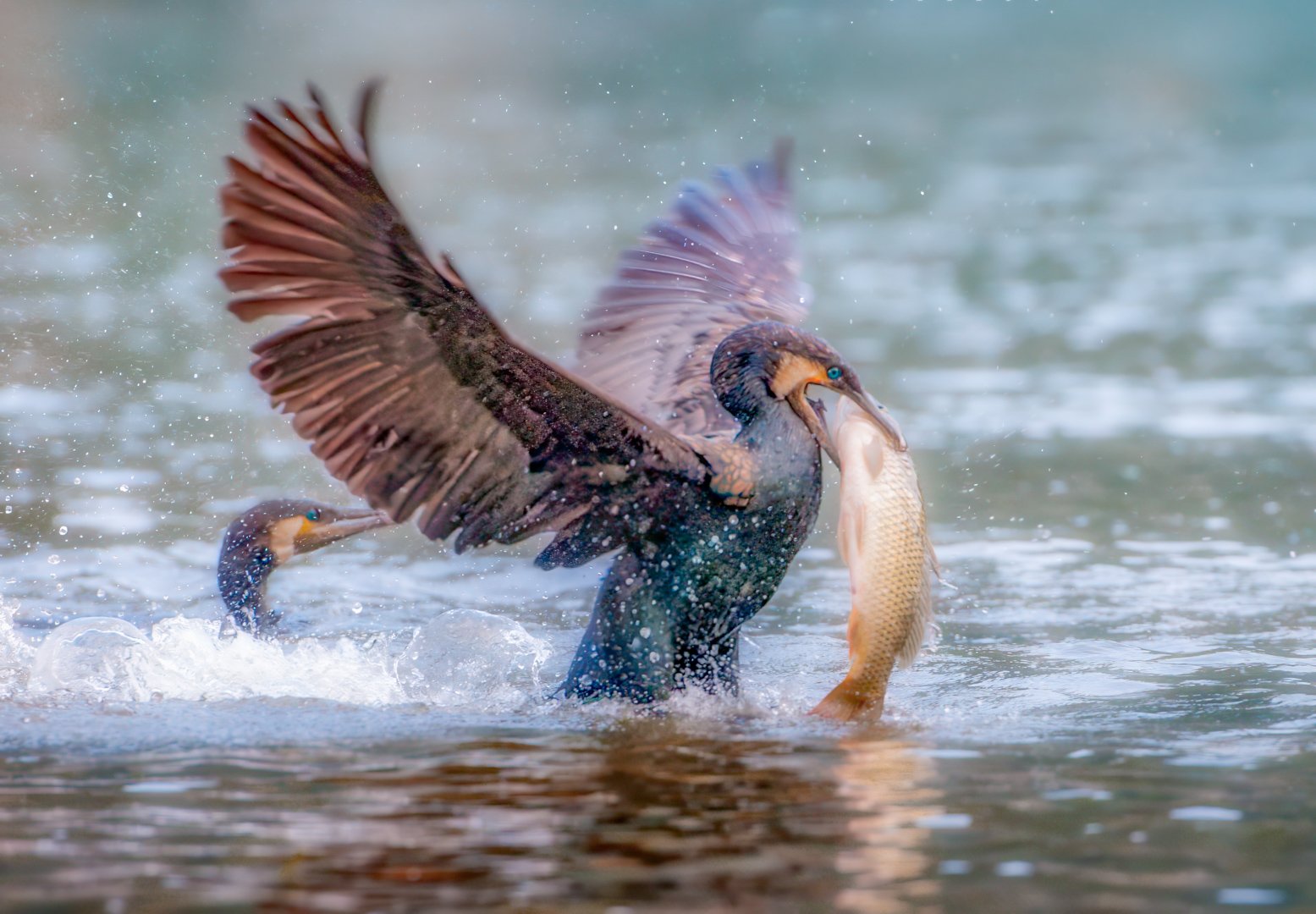
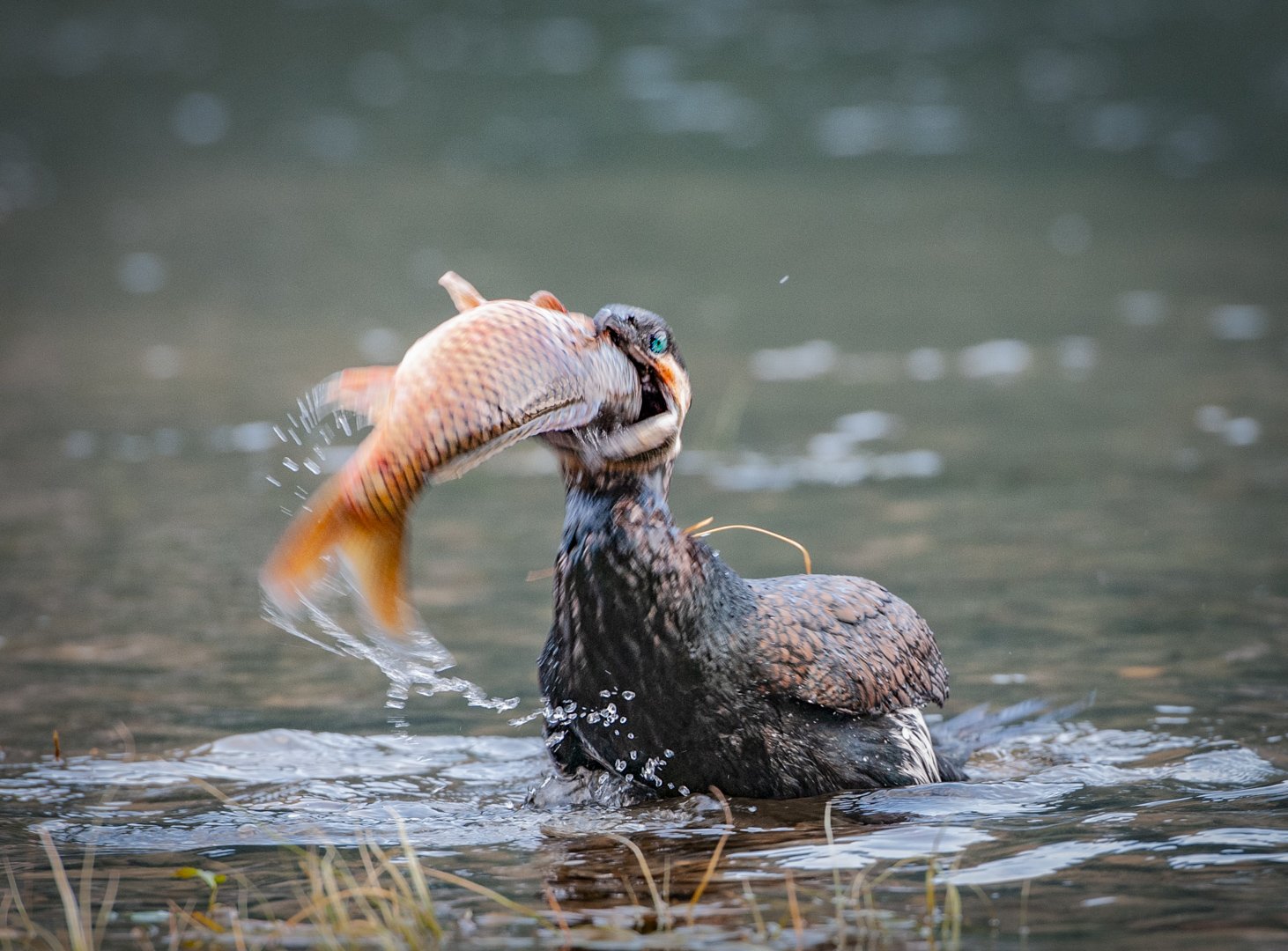
Traditionally, a loose cord or ring was placed around the bird’s neck. The cormorant could swallow smaller fish, but a sufficiently large fish could not pass through. When the bird surfaced with a large catch, the fisherman retrieved the fish and sent the bird out again. The birds were fed and rewarded as part of this working relationship.
The first time I learned about this practice, I was quite disturbed by it. Years ago, I remember watching a 60 Minutes segment about cormorant fishing. What stayed in my mind was the revelation that a ring or cord around the bird’s neck prevented it from swallowing the larger fish it had caught. I felt for the cormorant: How unfair. The cormorant did all the work, and the fisherman took away its dinner. That interpretation remained in my memory.
A Change in Perspective
As nature photographers, many of us have watched wild birds catch fish. Sometimes a great blue heron, egret or other fishing bird succeeds in catching something so large that swallowing it becomes a spectacle. The fish gradually disappears while the bird’s neck bulges around it.
In Africa, I once saw several great white pelicans aggressively pecking another pelican as it struggled to swallow a large fish as quickly as possible. Nature is not always gentle.
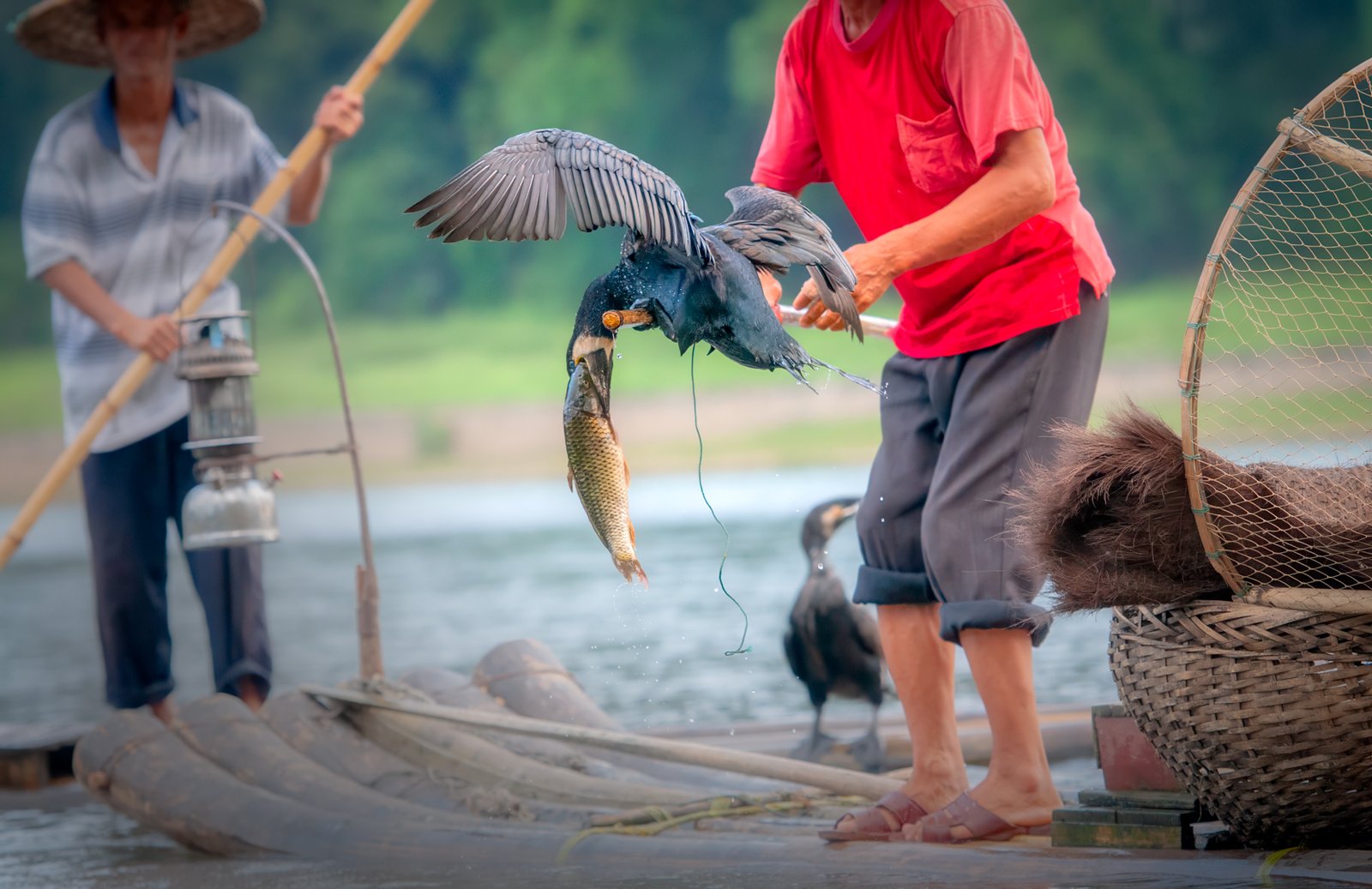
Watching these cormorants – and especially looking at the images years later – made their relationship with the fishermen seem more complicated to me than my earlier good-bird/bad-fisherman interpretation.
These were clearly trained birds accustomed to working in close association with the fishermen. The birds I photographed appeared well fed. They remained close to the rafts and to the men handling them. The relationship between bird and fisherman seems familiar and stable. One image in particular shows an elderly fisherman almost hugging his bird.
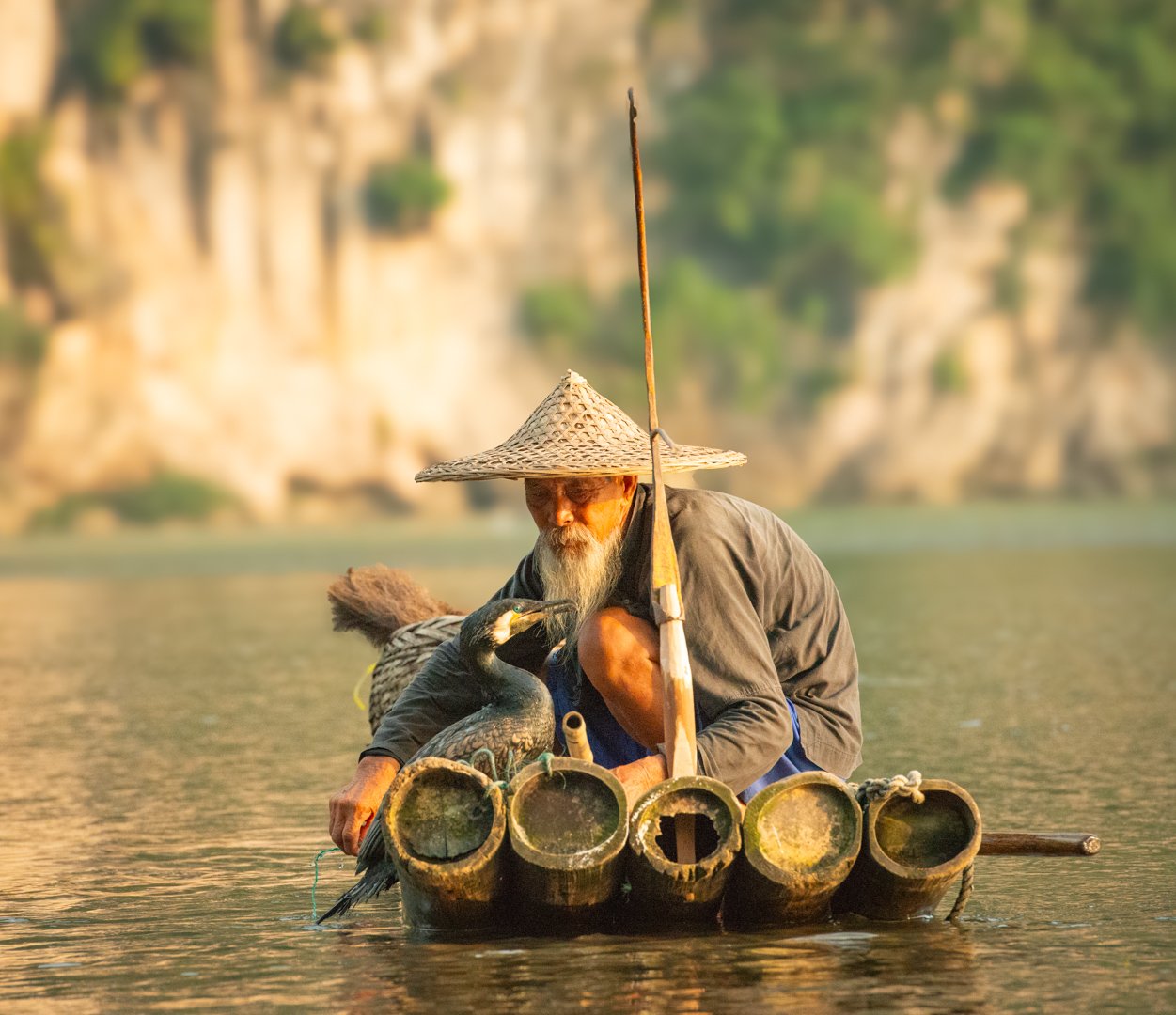
I hesitate to impose human emotions on an animal, and a photograph certainly cannot tell us whether a bird is “happy.” Nor does this eliminate ethical questions about restricting what an animal catches or using animals for human purposes.
But what I saw now seemed more complicated than cruelty on one side and victimhood on the other. It appeared to be a working relationship developed over generations between humans and birds whose natural fishing abilities were incorporated into a way of life.
Fishing – or a Living Museum?
There was another question I had not considered when I made the photographs. Was I actually photographing fishermen fishing for a living?
It now seems likely that I was not – at least not in the traditional sense.
Modern fishing methods have largely replaced this labor-intensive practice. Cormorant fishing survives today largely because visitors still want to see it – and photographers still want to photograph it, of course.
The technique itself was real. The fishermen knew how to handle the birds. The cormorants really did enter the water and catch fish. The relationship between bird and fisherman was not invented for my camera. But the reason for doing it had changed.
Once, the purpose was primarily to bring home fish. Now, increasingly, the purpose is to preserve and demonstrate a disappearing tradition – and to provide visitors with the experience and photographs they have come to see.
So, what we are watching is something like a living museum.
This realization made me reconsider the extraordinary sequence preserved in my photographs. A cormorant emerges with an enormous fish in its beak. Water flies. Wings spread. The fisherman reaches in and retrieves the catch.
It was visually spectacular – perfect for cameras. Perhaps too perfect.
I don’t know exactly how our demonstration was arranged, or whether I even thought of it as a demonstration at the time. That doesn’t make the photographs false. It changes what they mean.
We photographers are good at recognizing beauty, and Guilin practically demands it – the mist, the karst peaks, the lanterns. There’s nothing wrong with making that photograph. But sometimes the more interesting story sits just outside the frame we came intending to fill.
What was once a practical fishing technique has become cultural heritage. What I once interpreted as a cruel transaction between man and bird now seems more like a working relationship built over generations. And what appeared through my viewfinder as documentary action was also, partly, a performance for people like me.
None of these interpretations may be complete. A photograph preserves a moment; understanding it can take years. The images that finally taught me something new were the ones I couldn’t even remember taking.
.
 The Samburu Five